
Blog

Uncategorized

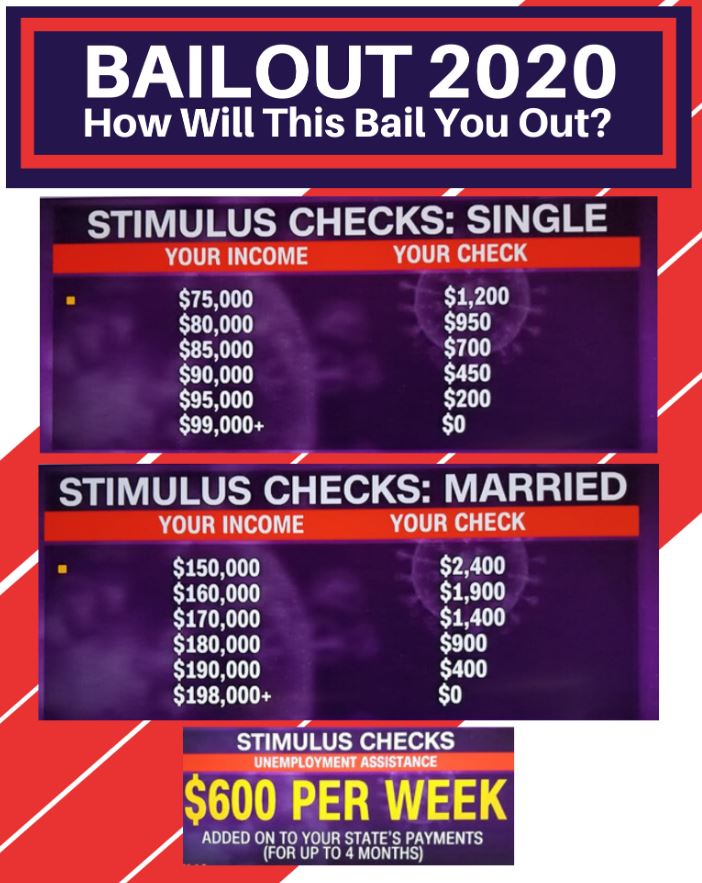
President Donald Trump Signs $2.2 Trillion Coronavirus Stimulus Package Into Law!

2020 CARES Act and Tax Credit is OFFICIAL!

Who is eligible:

U.S residents and citizens

Taxpayers not claimed by another person

Taxpayers with SSN and authorized to work in U.S

Economic Stimulus Check Summary:

IRS will issue checks based on 2019 tax information if you filed a tax return, if you haven’t filed yet, they will use 2018 tax information.

If you had lower income in 2019 and haven’t filed, it’s a good idea to file soon. If you haven’t filed 2019, 2018, 2017, 2016, 2015, 2014 tax returns email me ASAP!

Direct deposits is still the fastest and easiest way to distribute funds. However, the IRS will also mail checks

The economic stimulus check is non-taxable income

65+ year olds will continue receiving their social security benefits and they will also receive the economic stimulus check

The economic stimulus Corona Coins will be distributed next month since, it was approved by Senate, the House and the President signed it TODAY.

The government economic plan is that Americans will spend thees funds and get the economy back on track

Need more information visit: https://www.nytimes.com/article/coronavirus-stimulus-package-questions-answers.html

Need tax returns efiled call 470-312-7693 or email caroline@carokimcpaconsulting.com

#thanksTrump#irs#economicstimuluscheck#taxes#taxrefund#tax#taxreturn#taxpreparer#taxpreparation#coronacoins#coronavirus #CARESACT

Uncategorized

Change Of Address

We Have Moved!

One of the pros of hiring me is that, I always ensure there is proper and direct flow of communication between you and the government. This is why every tax season after you move, I ensure your address is updated with all government agencies – IRS, State, USCIS, SSA.


Why 🤔


1️⃣ To ensure you receive your TAX REFUND timely. If you choose to have your tax refund mailed, or if you have back tax refunds and interests owed, the government will use the mailing address on file to mail check refunds. Additionally, if you owe taxes, the IRS will only communicate via tax notices mailed to the address on file.


2️⃣ To avoid FRAUD. The IRS will never call you to demand ASAP payments, they will send you tax notices. If your address is correct, you will receive them and handle this promptly and thus avoid failure to pay interest and penalties.


3️⃣ To detect TAX DISCREPANCIES early. Once you receive your tax documents – W2s, 1099, 1098 etc, the government has already received a copy. Once we e-file your tax return, any inconsistencies in total income earned or unearned, because of unreported 1099s or W2 will be red-flagged and automatic tax notices will be mailed to whatever address is on file. To update your tax account and sync it with IRS, early discrepancy detection and tax amendment is paramount.


4️⃣ To CONFIRM my words and work with IRS via tax notices sent. If I tell you, your amount due: $56,437 and the IRS is in the process of levying your property, garnishing your wages, sermoning you to court and confiscating your passport, the tax notice you receive will state exactly that – fact check!


5️⃣ Because I 💜 my clients and it’s the RIGHT thing to do! This extra mile, task and effort will provide you with unmatched peace of mind.

Industry Clients

Household Employers Taxing Household Employees

Household Employees

Article highlights:

  • Examples of household employees
  • Types of household employees income
  • Income amount required to be reported
  • Income schedules and forms to report
  • Records required to be kept

1. Household Employees

Examples of household employees:

  • Babysitters
  • Butlers
  • Caretakers
  • Cooks
  • Domestic workers
  • Drivers
  • Health aides
  • House cleaning workers
  • Housekeepers
  • Maids
  • Nannies
  • Private nurses
  • Yard workers

Above household employees don’t include:

  • Your spouse
  • Your child who is under the age of 21
  • Your parent

Above household employees receive a W-2 from their household employers or employers accountant and not a form 1099.

Learn and understand EITC thresholds and ensure every payment is included in your W-2.

Types of household employee income:

  • Salary and bonuses
  • Overtime pay
  • Vacation and sick pay
  • Car allowances- Gift cards
  • Taxes not withheld from paycheck

2. Household employers

Salaries and wages paid to household employees over $2,200 must be reported.

You are not required to withhold federal income tax from salaries and wages of your household employee.

However, you are required to file:

  • Social security and Medicare wages.
  • FUTA wages.
  • Wages from which you withhold federal income tax.

Schedule H, Forms 941, 943 or 944

File Schedule H with your 1040 tax return as well as state withholding and unemployment reports.

Schedule H will either decrease your tax refund or increase your tax liability on your 1040 return.

To avoid dual tax reporting use either schedule H or 941 – quarterly form.

Note that IRS allows household employers who are self-employed – business or farm to include their household employees on their business payroll on forms 941, 943 or 944.

Record keeping includes:

  • Employee’s cash and non cash wages.
  • Employee social security tax that you withhold from your employee.
  • Employee Medicare tax that you withhold from your employee.
  • Any federal income taxes you withhold.
  • Any state employment taxes you withhold.

For more on info. visit: Household Employer’s Tax Guide – Pub 926

Uncategorized

Investing from experience

👩‍💼 I’m a nerd, a big fun of everything and everyone accounting and, a professional financial student at ‘Suze & Dave Ramsey Financial Peace University’ ✍️.

🦹‍♀️ In college I was a risk lover, tired investing in Kenya and bought Equity Bank shares that ended up being oversold and half my investment money was returned. I quickly took my hard earned coins and invested in index mutual funds and bonds in Kenya 🎯.

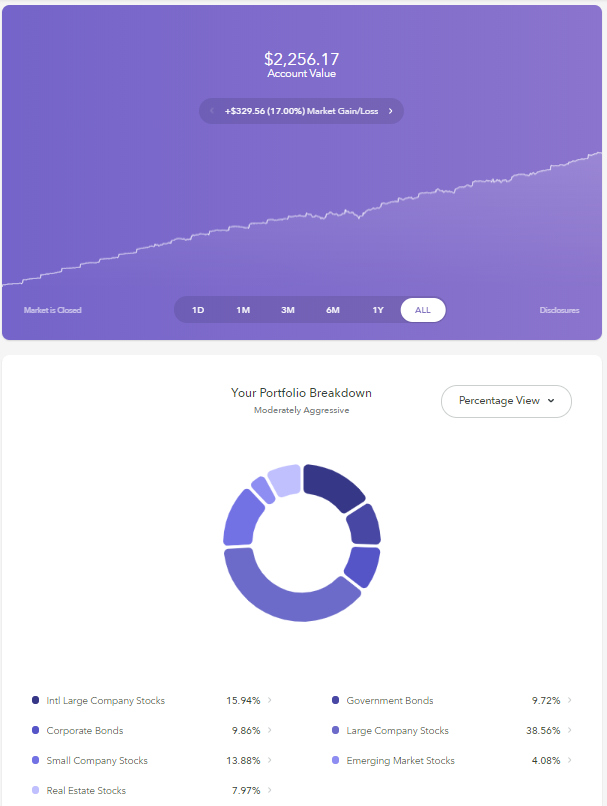
👩‍💻 In US I am risk averse and a hands-on day trader. I started by opening a Charles Schwab account, signed up for no commission fee and $100 automatic monthly deposit. Currently, I use these funds to buy and sell as many ETFs – exchange traded funds shares as I can afford. I have diversified my portfolios to various industries both in the US and internationally.

Captu🙅‍♀️ I never invest in stocks I know nothing about – I read the Wall Street Journal and Morning Star daily, review the market weekly, watch Mad Money and Squawk Box occasionally. 💰 I buy stocks from companies I work at, buy often or genuinely like and enjoy such as: Facebook, Microsoft, Amazon, Home Depot, Alibaba, American Tower, Apple, Disney, Marathon Petroleum, Cannabis WMT, COST, KO, SBUX, NFLX, JNJ, T e. t. c.

💎 Projections: If you invest in ETFs $100 per month for 25 years, earn an annualized 7%, you will have more than $80,000. Over 40 years, you will have more than $261,000.

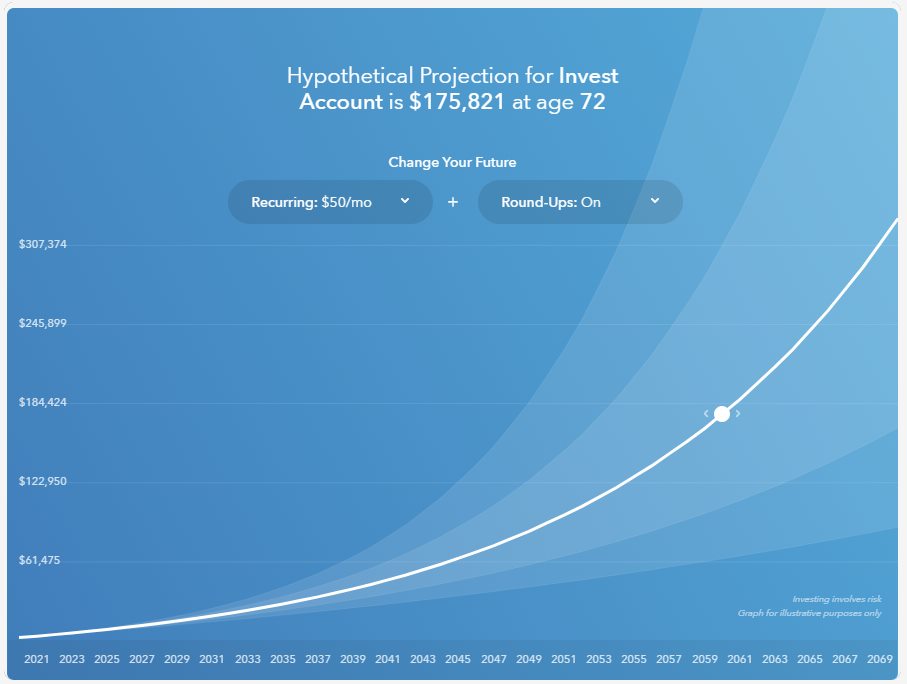
Projections: If you invest in Acorns $50 per month for 72 years, earn an annualized 6%, at a 4%-8% rate of return. Over 42 years, you will have more than $175,000.

🗞👩‍🏫📚 Other resources I use to learn and grow my knowledge are Acorns, Cash App, E-Trade, TD Ameritrade and like/follow any trading groups and IG pages.

💱 Forex Trading is also lucrative. Keep checking this blog for an article on FX Trading. 

📑 For the previous year, you will receive the following Forms (might be all in one) 1099-DIV for any dividends you receive, 1099-MISC for any referral bonuses and 1099-B for any taxable gains you may have made when you sold your investment 🧾.

2020 tax season to e-file 2019 tax returns opened TODAY. The IRS website has great free resources to research how to file and report income, use it or consult me – I’m tax professional. 👩‍🎓

#Investment #Investing #Taxes #1099DIV #1099B #1099MISC #IRS #ETFs #Indexmutualfunds #Bonds #ForexTrading

83729511_3051155834903738_1663958377299968000_n


Uncategorized

2019 and 2020 Increases In Medical Deduction

Tax DeductionsOn December 20, 2019, President Trump signed into law the Appropriations Act of 2020, which included a number of tax law changes, including extending certain tax provisions that expired after 2017 or were about to expire, a number of retirement and IRA plan modifications, and other changes that will impact a large portion of U.S. taxpayers as a whole. This article is one of a series of articles dealing with those changes and how they may affect you.

Medical expenses are deductible as an itemized deduction but only to the extent they exceed a percentage of a taxpayer’s adjusted gross income (AGI). For a long time, the percentage was 7.5%, which was then raised for under-age-65 taxpayers to 10% for 2013 through 2016 and then lowered back to 7.5% for all taxpayers for years 2017 and 2018. It was scheduled to go back up to 10% starting with tax year 2019. However, with the passage of the Appropriations Act of 2020, Congress reduced that percentage back to 7.5% for tax years 2019 and 2020, allowing more taxpayers to qualify for the medical deduction.

However, keep in mind that the total of the itemized deductions must exceed the standard deduction before the itemized deductions will provide a tax break. So even if your medical deductions exceed the 7.5% floor, this doesn’t necessarily mean you will have a tax benefit from them.

To help you maximize your medical deductions, the following are some medical expenses other than those for doctors, dentists, hospitals, and prescriptions that are sometimes overlooked:

  • Adult Diapers
  • Acupuncture
  • Birth Control
  • Chiropractor Visits
  • Drug-Addiction Treatment
  • Fertility Enhancement Therapy
  • Gender Identity Disorder Treatments
  • Guide Dog Expenses
  • Health Insurance Premiums* – Including the premiums you pay for coverage for yourself, your dependents, and your spouse, if applicable, for the following types of plans:
    o Health Care and Hospitalization Insurance
    o Long-Term Care Insurance (but limited based upon age)
    o Medicare B
    o Medicare C (aka Medicare Advantage Plans)
    o Medicare D
    o Dental Insurance
    o Vision Insurance
    o Premiums Paid through a Government Marketplace, Net of the Premium Tax Credit

    *However, premiums paid on your or your family’s behalf by your employer aren’t deductible because their cost is not included in your wage income. If you pay premiums for coverage under your employer’s insurance plan through a “cafeteria” plan, those premiums aren’t deductible either because they are paid with pre-tax dollars.

  • Home Modifications for Disabled Individuals
  • Lactation Expenses
  • Learning Disability Special Education
  • Nursing Home Costs
  • Nursing Services (which need not be performed by a nurse)
  • Pregnancy Tests
  • Smoking-Cessation Programs

This is not an all-inclusive list, so please call with questions related to expenses that you think might qualify as a medical expense.

As a tax tip, if you are self-employed, you may be able to deduct 100% (no 7.5%-of-AGI reduction) of the cost of medical insurance without itemizing your deductions. This above-the-line deduction is limited to your net profits from self-employment. If you are a partner who performs services in that capacity and the partnership pays health insurance premiums on your behalf, those premiums are treated as guaranteed payments that are deductible by the partnership and includible in your gross income. In turn, you may deduct the cost of the premiums as an above-the-line deduction under the rules discussed in this article.

No above-the-line deduction is permitted when the self-employed individual is eligible to participate in a “subsidized” health plan maintained by an employer of the taxpayer, the taxpayer’s spouse, any dependent, or any child of the taxpayer who hasn’t attained age 27 as of the end of the tax year. This rule is separately applied to plans that provide coverage for long-term care services. Thus, an individual who is eligible for employer-subsidized health insurance may still deduct long-term care insurance premiums, as long as he or she isn’t eligible for employer-subsidized long-term care insurance. In addition, for the insurance to be treated as subsidized, 50% or more of the premium must be paid by the employer.

This above-the-line deduction is also available to more-than-2% S corporation shareholders. For purposes of the income limitation, the shareholder’s wages from the S corporation are treated as his or her earned income.

The above-the-line deduction includes the premiums you pay for health coverage for yourself, your dependents, and your spouse, if applicable, for the types of plans listed under “Health Insurance Premiums” above.